If you are deciding between a home in Sag Harbor Village and a waterfront property nearby, the right choice often comes down to how you want to spend your time. Do you picture stepping out for coffee, dinner, and the harbor in just a few minutes, or do you want direct water access, wider views, and more privacy at home? In Sag Harbor, both lifestyles are compelling, but they feel very different in practice. This guide will help you compare the two so you can make a more confident move. Let’s dive in.
Village Living in Sag Harbor
Sag Harbor Village is shaped by its history as a whaling seaport, with a compact core that connects Main Street, Long Wharf, residential streets, parks, and waterfront areas, according to the village waterfront revitalization plan. That history still shows up in the streetscape today.
Much of the village was locally designated as a historic district in 1974 and later listed on the State and National Registers, as noted in the same village planning document. For you, that often means a more established setting, recognizable architecture, and a layout built around walking rather than driving.
What daily life feels like
Village living is usually about convenience and character. Planning materials describe Main Street as a destination for waterfront users, and the harbor office notes that marina users are a short walk from shops, restaurants, and public bus transportation in the village harbor and planning materials.
If you want to be closer to dining, marinas, the library, and public waterfront amenities, the village often has the edge. Your routine may feel less centered on the car and more centered on what is within a short walk.
How homes and lots differ
The village core tends to feel older, denser, and more layered over time. Local planning documents describe the historic character through notable architecture and a well-defined street pattern, while local law describes historic district buildings as closely built colonial and 19th-century timber-frame structures on small, irregular lots in many areas of the district.
That usually means your lot may be smaller, your home may sit closer to the street, and the visual rhythm of the block matters. If you love homes with a sense of place and an established setting, this can be a major draw.
Waterfront Living in Sag Harbor
Waterfront and bayfront living in Sag Harbor shift the focus from village proximity to direct contact with the water. The village harbor page describes seasonal and transient dockage, moorings, and a boating season that runs from April 1 through October 31, reinforcing how central boating is to this part of the market.
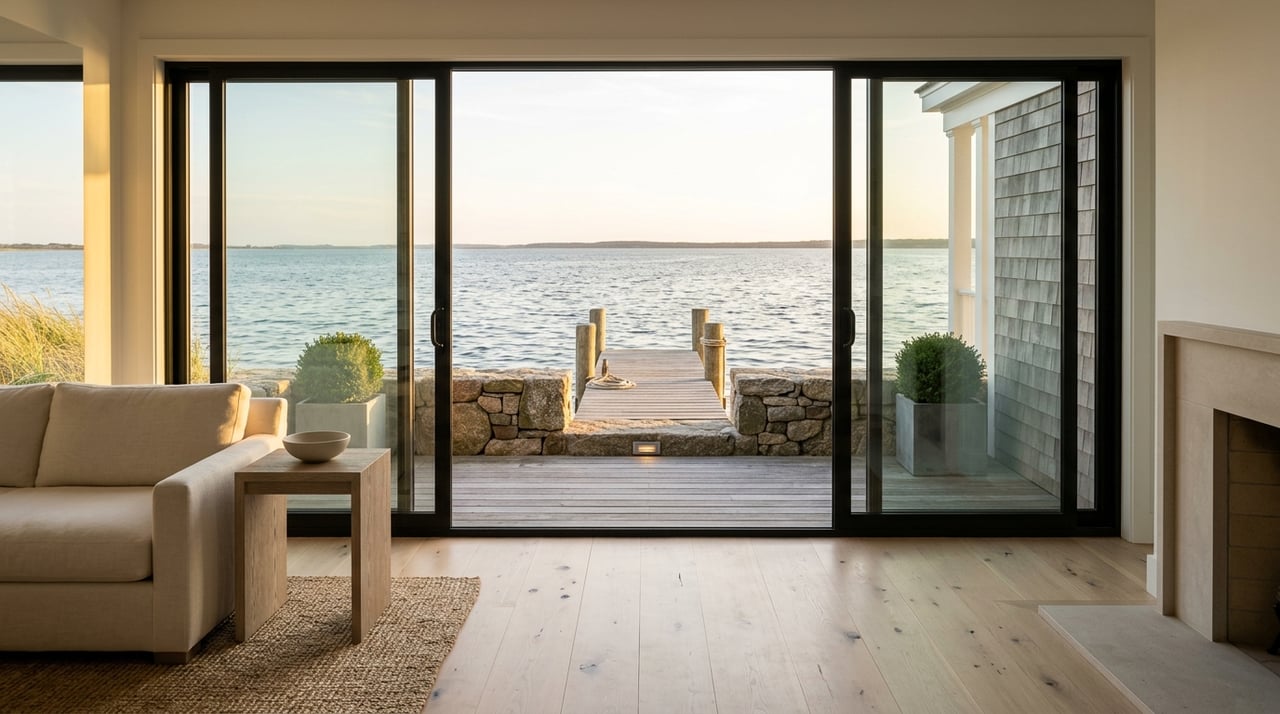
If your ideal property includes a dock, open views, or the ability to launch a kayak or paddleboard from home, waterfront living offers a different kind of everyday access. It is less about being near the harbor and more about living on it.
What daily life feels like
The practical appeal of waterfront living often comes down to privacy, views, and outdoor use. Compared with village-center homes, these properties usually offer more private outdoor space and stronger orientation to the bay or harbor.
For some buyers, that difference changes everything. Your home can become the starting point for boating, entertaining, and quiet time outdoors rather than a place from which you head into town.
What rules may matter more
Waterfront properties are also shaped by more specific design and zoning considerations. The village waterfront planning FAQ explains that the area was intended to retain human scale, eclectic character, and access to the water, while the proposed overlay district would regulate building form, placement, required viewsheds, sidewalks, pedestrian corridors, and access for private and public spaces in the waterfront area.
The same waterfront planning FAQ notes that the district is intended to support water-dependent uses such as marinas and boatyards. A 2023 local law further tightened the Waterfront Overlay District by limiting waterfront property height to 25 feet, which can directly affect design plans and renovation expectations.
Price Differences to Expect
Sag Harbor commands a premium within the broader Hamptons market. In the Elliman Hamptons Q4 2025 report, Sag Harbor posted a median sales price of $3.175 million, compared with $2.35 million for the Hamptons overall. The same report shows 58 closed sales, 123 listings, and 6.4 months of supply for Sag Harbor.
That broad market snapshot is useful, but the gap between village and waterfront homes can be significant even within Sag Harbor itself. In general, direct water access and private docking push pricing higher, while village homes may offer stronger value if walkability and location are your top priorities.
Examples within the village
Available and recent examples help show the range. 300 Madison Street, a residence in the village historic district near Main Street and Havens Beach, sold for $1.855 million.
At the higher end of village living, 27 Howard Street is priced at $4.995 million and is described as being in the heart of the village, close to Main Street and the harbor. Even without direct waterfront, prime village positioning can command a substantial premium.
Examples on the waterfront
Waterfront pricing can move higher quickly when frontage and dock access are part of the offering. 210 Redwood Road is a waterfront listing priced at $6.5 million with 228 feet of frontage and a private dock.
That spread gives you a practical lens for comparison. In many cases, you are paying not just for the house itself, but for water adjacency, boating utility, and the scarcity of the setting.
Rental Appeal in Both Settings
If you are also thinking about seasonal use or rental income, both village and waterfront homes can attract demand, but often for different reasons. Village rentals can appeal to people who want quick access to downtown and nearby waterfront amenities, while waterfront rentals often draw interest for privacy, docks, and outdoor lifestyle.
The pricing examples reflect that premium. 85 Hempstead Street, a village home near Havens Beach and downtown, is offered at $44,000 for June and $164,000 from Memorial Day to Labor Day. 69 Cliff Drive, a waterfront home with a dock and pool, is offered at $85,000 for July and $170,000 for July through August.
Why regulation matters
Rental demand does not mean unlimited flexibility. Sag Harbor adopted a Rental Permit Registry in 2023 to regulate residential rentals, and in 2024 the code was amended to remove the requirement that a fully executed lease be submitted with the application.
If rental use is part of your decision, it is smart to evaluate the property not only for appeal, but also for compliance and operating practicality. That is especially important in a market where high seasonal rates can make a home look attractive on paper.
How to Choose the Right Fit
When you compare these two lifestyles, the better option is usually the one that matches your habits, not just your wish list. A beautiful waterfront home can feel underused if you really want to walk into town often. In the same way, a charming village house may not satisfy you if your top priority is keeping a boat at home.
A simple way to frame the choice is this:
- Choose village living if you value historic character, shorter walks to shops and dining, smaller-lot settings, and village-center convenience.
- Choose waterfront living if you value dock access, sunsets, boating, privacy, and you are comfortable with a higher price point and more design-related restrictions.
For many buyers in Sag Harbor, this is not just a style decision. It is also a time-use decision, a maintenance decision, and in some cases an investment decision.
Key Questions to Ask Yourself
Before you decide, it helps to be honest about how you will actually use the property.
- Do you want to walk to Main Street regularly?
- Is a private dock or direct water access a must-have?
- Are you comfortable with a smaller lot in exchange for location?
- Would you pay more for privacy and views?
- Are you considering seasonal rental use?
- How important are renovation flexibility and zoning constraints?
The clearer you are on those points, the easier it becomes to narrow your search and avoid expensive compromises.
If you are weighing village convenience against waterfront privacy in Sag Harbor, a data-driven search can save time and sharpen your decision. Alison Graham offers discreet, high-touch guidance for buyers, sellers, and seasonal clients who want a clear view of how lifestyle, pricing, and long-term value intersect in the Hamptons.
FAQs
What is the main difference between Sag Harbor Village and waterfront living?
- Sag Harbor Village generally offers more walkability, historic character, and proximity to Main Street, while waterfront living usually offers direct water access, more privacy, and stronger boating appeal.
Are waterfront homes in Sag Harbor usually more expensive than village homes?
- Often yes, especially when a property includes frontage, open views, or a private dock, although pricing varies by location, condition, and overall offering.
Is Sag Harbor Village considered walkable?
- Village planning materials indicate that marina users are a short walk from shops, restaurants, and public bus transportation, which supports the village’s reputation for convenience and access.
Do waterfront properties in Sag Harbor have stricter rules?
- Yes, waterfront properties may be affected by overlay district regulations related to building form, placement, viewsheds, pedestrian access, and a 25-foot height limit referenced in village materials.
Can you rent out a village or waterfront home in Sag Harbor?
- Rental potential exists in both settings, but Sag Harbor regulates residential rentals through its Rental Permit Registry, so compliance should be part of your planning.
Which Sag Harbor lifestyle is better for boating?
- Waterfront living is usually better for boating if you want direct access from your property, while village living may still offer convenience to marinas and harbor amenities without private dockage.