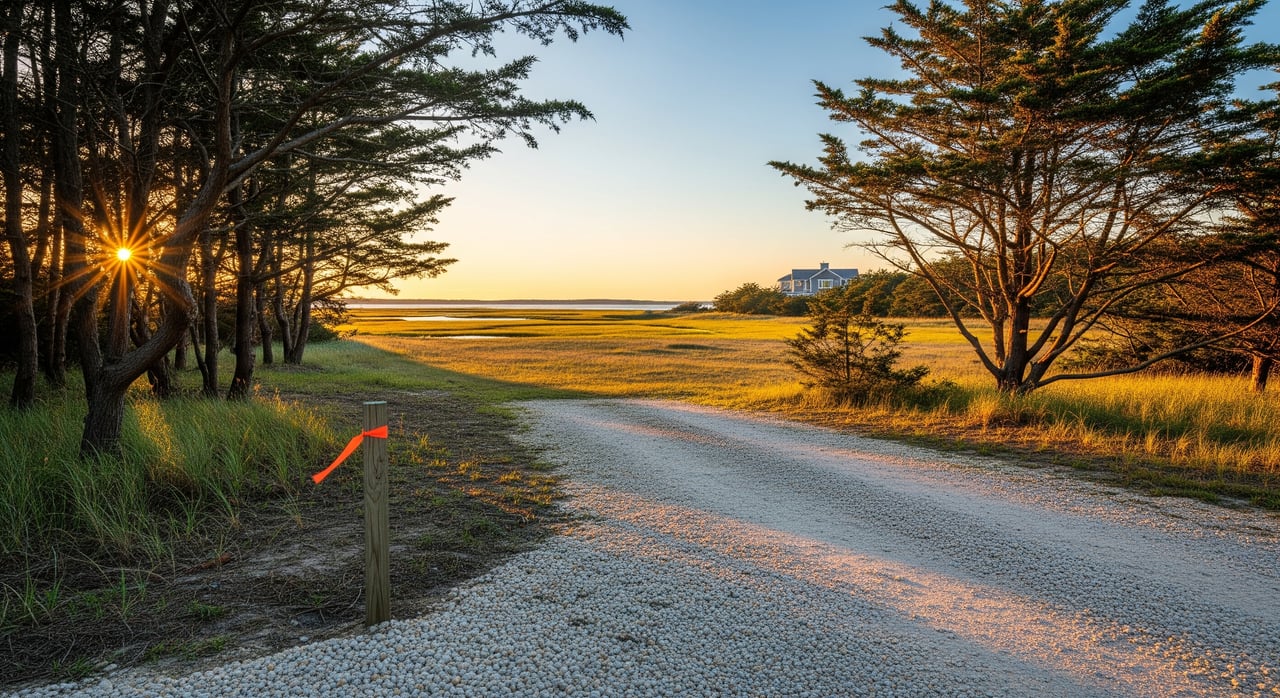
Staring at a vacant lot in Water Mill and trying to pin down its value can feel slippery. You might see potential, yet the real question is what you can actually build, how long it will take, and what it will cost. In this guide, you will learn how to confirm buildability, model value with confidence, and reduce risk before you write an offer. Let’s dive in.
Confirm legal buildability first
Before you talk price, confirm the lot is legally buildable in the Town of Southampton. Start by identifying the zoning district. Zoning controls minimum lot size, frontage, setbacks, height, and lot coverage. If the lot is nonconforming or part of a prior subdivision, you want clarity on what is allowed by right versus what needs a variance.
Water Mill also has special overlays. These include coastal and wetlands regulations, and in some areas historic or architectural review. These layers affect the building envelope and the permit path. A quick assumption here can lead to costly delays.
Your permitting pathway
Most single home builds require a building permit from the Town of Southampton. If the project needs variances, site plan approval, or involves a subdivision or lot line change, plan for a Planning Board or Zoning Board of Appeals process. If wetlands or coastal resources are present, additional permits can be required by the Town, New York State, or federal agencies.
Must-have documents to verify
- A stamped boundary and topographic survey that shows setbacks, easements, flood elevations, and any wetlands.
- A zoning confirmation or compliance letter from the Town of Southampton.
- Title review for deed restrictions, covenants, rights-of-way, and access easements.
- If near water or mapped wetlands, a wetlands delineation and buffer mapping.
Utilities and access you can bank on
Utilities can make or break feasibility. In parts of eastern Suffolk, you will rely on on-site septic rather than municipal sewer. Septic design drives house placement, reserve area, and setbacks to wells or structures. Early percolation testing and a septic engineer’s input will save you time.
Water, power, and gas
Confirm if the Suffolk County Water Authority serves the parcel. If not, you may need a private well and water-quality testing. For electricity, check proximity to distribution lines and whether a transformer or pole is needed. Natural gas is not universal in the Hamptons, so many homes use oil, propane, or electric heat pumps.
Road access and driveways
Verify legal frontage on a public road. If access is via a private road, look for recorded maintenance agreements. Curb cuts on town roads can require a permit, and steep or long driveways add cost and review time.
Easements that limit value
Common easements include utilities, conservation buffers, public access, and shared driveways. These reduce the buildable area and can affect lender appetite. Map them on your survey so you see the true envelope.
Wetlands and flood zones in Water Mill
Water Mill includes tidal and freshwater resources. Mapped wetlands trigger buffers that shrink buildable area and add permit layers. If the lot sits in a FEMA flood zone, you will face base flood elevation requirements that affect foundation type, materials, and insurance. Each adds time, cost, and design constraints, which must be reflected in your model.
Site conditions that drive cost
Topography, soils, and vegetation shape construction scope. Steep slopes, high groundwater, poor percolation, or rock ledge can require special foundations, retaining walls, import or export of soil, and alternative septic systems. Tree clearing can be regulated and may require mitigation landscaping.
Typical studies and reports
- ALTA or boundary survey with topography
- Percolation testing and septic design
- Geotechnical borings if slopes or subsurface conditions warrant
- Wetlands delineation and ecological assessment if applicable
- Flood elevation certificate when in a mapped flood zone
Valuation methods that work in Water Mill
Once you confirm buildability, choose the valuation approach that fits your data and goals. In the Hamptons, vacant-lot sales are limited, so you may blend methods.
1) Vacant-lot comparable sales
Use recent sales of similar buildable lots in Water Mill or immediately adjacent areas. Adjust for lot size, zoning, shape, frontage, utility access, wetlands or buffers, flood exposure, and proximity to ocean or bay. When lot comps are thin, expand the search window with care and time-adjust prices.
2) Allocation from improved sales
Estimate land value as a share of total property value. In many single-family areas, land may be a meaningful percentage of the sale price, but local ratios vary widely in the Hamptons. Pair this with local broker insight and a careful read of property characteristics.
3) Residual land value for investors
If you plan to build, residual modeling is your best tool. The formula is straightforward:
- Land Value = Resale value after completion minus hard costs minus soft costs minus carry costs minus profit
Hard costs include construction and site work. Soft costs include permits, design, testing, legal, and brokerage. Carry costs include interest, taxes, insurance, and utilities during the build and marketing.
Simple example
- Expected resale value for a 3,000 square foot home: 2,500,000 dollars
- Hard construction costs with site work: 1,000,000 dollars
- Soft costs: 300,000 dollars
- Carry and sales costs: 100,000 dollars
- Developer profit target: 300,000 dollars
Residual land value equals 2,500,000 minus 1,700,000, which equals 800,000 dollars. Run sensitivities for higher construction costs, longer approvals, and different resale values to see your risk range.
Buildable area is the lever
Your price should reflect the actual buildable envelope, not just gross lot size. To calculate it:
- Overlay zoning setbacks, height, and coverage on the survey.
- Add wetlands buffers, flood elevations, easements, and access constraints.
- Reserve areas for septic and stormwater as required by county health rules.
- Compute the remaining buildable footprint and potential floor area.
Express buildable area as a percent of total lot size. Use that ratio to adjust comps and to validate your residual model inputs.
Timelines, permits, and soft costs
Plan for realistic review times. A straightforward building permit can take several weeks to a few months once submissions are complete. Planning Board or subdivision reviews can run 3 to 9 months or more. Wetlands and coastal permits can take several months to a year depending on complexity and mitigation needs. Septic approvals vary based on testing and design revisions.
Typical soft costs include surveys, architectural and engineering plans, septic design and testing, geotechnical borings, wetlands studies, flood certifications, application and review fees, legal and title work, and utility connection fees. Include construction loan interest, taxes, insurance, and a contingency for time and cost overruns.
Due diligence checklist for Water Mill lots
- Confirm zoning district and permitted use, then request a zoning compliance letter.
- Order a stamped boundary and topographic survey and, if relevant, a wetlands delineation.
- Run percolation tests, septic design, and geotechnical borings where indicated.
- Verify water service availability or plan for a well; confirm electric and gas availability.
- Obtain written utility availability letters for power, gas, and telecom.
- Pull FEMA flood status and required finished-floor elevation if applicable.
- Review title for easements, covenants, and road access.
- Gather recent vacant-lot and improved-sale comps and tax history.
- Get written estimates from local builders and consultants for hard and soft costs.
- Meet early with town staff or a land-use attorney to map the permit path.
When to bring in specialists
You gain speed and certainty when you hire the right team early. Key players include a licensed land surveyor, a civil or site engineer, a septic designer familiar with Suffolk County rules, a wetlands or environmental consultant, an architect and local builder, a land-use attorney, and a local broker with Hamptons land expertise.
Make a confident offer
Price should reflect what you can build, how long it will take, and the true cost of approvals and utilities. Use your survey to fix the envelope, choose a valuation method that fits your data, and model scenarios so you see the range. That is how you avoid surprises and protect returns in Water Mill.
If you want a clear, investor-grade framework tailored to your lot, connect with Alison Graham for discreet, analytical guidance on Water Mill land and new construction.
FAQs
What makes a Water Mill lot “buildable”?
- The lot must meet Town of Southampton zoning and frontage rules, fit required setbacks and coverage, and secure all needed permits for building, utilities, and any wetlands or coastal approvals.
How do wetlands impact value and design?
- Wetlands trigger buffers that reduce buildable area and add permit layers, so you should map buffers on the survey, plan mitigation if needed, and reflect added time and cost in your valuation.
Do I need public water or sewer to build?
- Many parcels use on-site septic and are not on municipal sewer, so you should confirm water service availability, plan for a well if needed, and budget for septic testing and design.
How long do permits take in Southampton?
- Timelines vary: simple building permits can take weeks to a few months, planning reviews often take several months, and wetlands or coastal permits can extend to a year for complex cases.
What is the best way to value a lot if comps are thin?
- Blend methods: use any relevant vacant-lot sales, allocate land from improved sales, and run a residual land value model that subtracts all costs and profit from your expected resale.
Which costs are easy to miss when modeling?
- Common misses include utility extensions, stormwater and septic upgrades, flood elevation requirements, design review changes, and carrying costs during longer approvals.