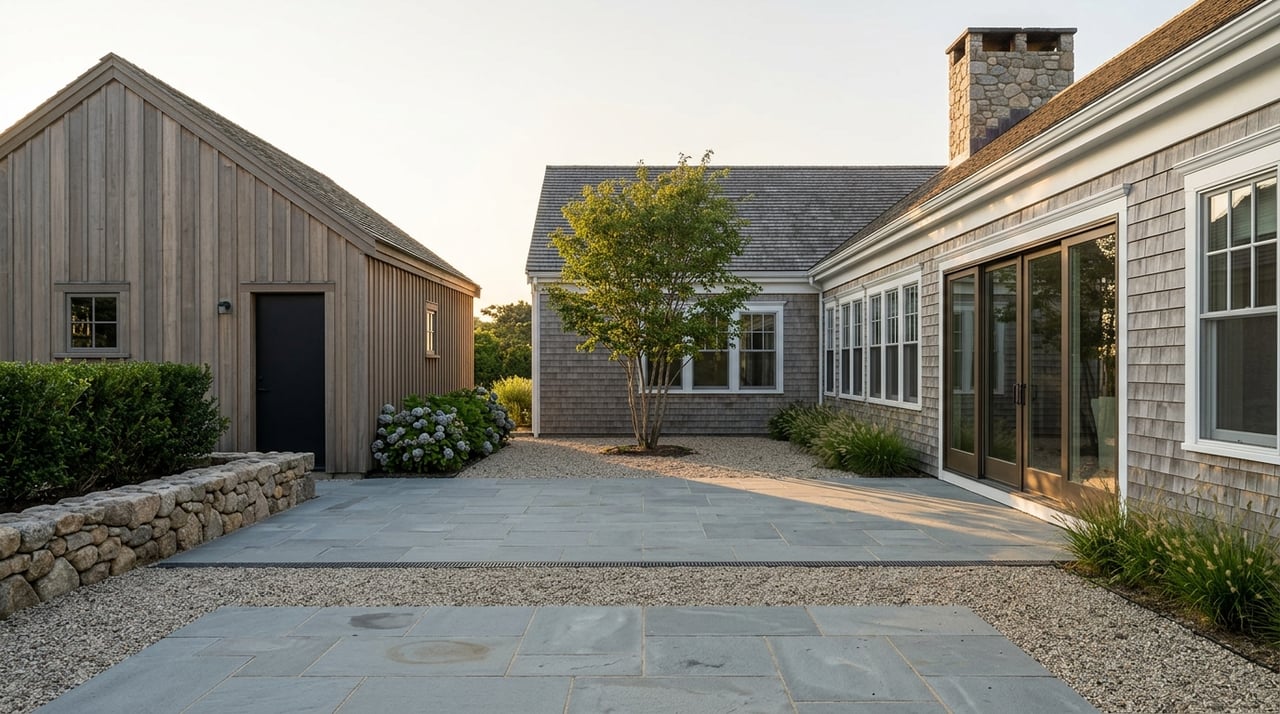
What if one of the smartest Hamptons buys is not the loudest name on the map? If you are weighing where Water Mill fits in your portfolio, you are likely looking for more than prestige alone. You want privacy, staying power, rental optionality, and a realistic path to long-term value. This is where Water Mill starts to stand out. Let’s dive in.
Why Water Mill draws serious buyers
Water Mill is a hamlet in the Town of Southampton on the South Fork of Long Island, positioned between Noyac and Bridgehampton, with Mecox Bay and the Atlantic Ocean to the south. According to the town profile, it is primarily agricultural and residential, with more designated agricultural land than any other hamlet in Southampton Town. That gives Water Mill a different feel from a more village-centered market.
For you as a buyer or portfolio-minded owner, that matters. Water Mill tends to trade on privacy, land, access, and estate character more than walkability or dense retail convenience. The town also describes the area as auto-dependent, with narrow country roads and limited sidewalk and bike infrastructure, which reinforces its quieter, lower-traffic identity.
The local demographic profile also supports the idea of Water Mill as a high-end ownership market. Census Reporter’s 2024 ACS profile shows 2,764 residents, a median age of 54.9, median household income of $186,875, and a median owner-occupied home value of $2,000,001. In simple terms, this is a small, affluent market with a strong base of established owners.
Water Mill’s market position
Water Mill is clearly premium-priced, but it does not always carry the same headline brand recognition as a few nearby Hamptons enclaves. That can be part of its appeal. You get a highly regarded location without always paying for the loudest name.
As of June 2026, Realtor.com reports a median listing price of $7,995,000 in Water Mill, along with 103 active for-sale listings and a median of 89 days on market. The reported sale-to-list ratio was 94%, which suggests buyers have some negotiating room compared with a faster, tighter market.
Douglas Elliman and Miller Samuel’s Q3 2025 Hamptons report adds useful context. Water Mill posted a median sales price of $4,825,000, 19 closed sales, 108 active listings, and 17.1 months of supply. In the same report, Bridgehampton was higher at $6.81 million, and Sagaponack was $5.8 million, while Southampton and East Hampton came in lower at $2.337 million and $2.1375 million.
That places Water Mill in an interesting middle lane. It is still firmly upper-tier, but it can appeal to buyers who want Hamptons credibility, discretion, and land without aiming for the most overtly branded submarket.
Why Water Mill can be a quiet star
The strongest case for Water Mill is not that it is cheap. It is not. The case is that it offers a scarce combination of discreet luxury, estate-scale settings, and lifestyle optionality.
Town planning documents describe Water Mill as centered on tourism and vacation homes, but with a land-use pattern shaped by agriculture and residential estates. That supports a market where homes can function in several ways over time: a second home, a long-hold family asset, a seasonal rental, or part of a broader lifestyle portfolio.
If you are thinking like an investor, that flexibility matters. A market does not need to be the flashiest to be compelling. It needs durable demand, limited supply characteristics, and a buyer pool that values what the location uniquely offers.
How the broader Hamptons trend helps
Water Mill also benefits from the strength of the wider Hamptons market. Miller Samuel’s 1Q 2026 Hamptons overview says the regional median sales price reached a record $2,412,500, with the market continuing to shift toward higher-end sales.
That does not mean every property moves at the same pace. It does mean the broader buyer base still supports luxury pricing. In Water Mill, that backdrop can be especially helpful because the market is already geared toward affluent second-home and estate buyers rather than entry-level demand.
Rental income is possible, but not casual
If part of your strategy is seasonal income, Water Mill can work, but you need to underwrite it correctly. This is not a short-stay hospitality play. Southampton Town’s rules make that clear.
The town’s rental FAQ states that any home rented for any period of time requires a rental permit. The minimum rental term is 14 days, and anything shorter is considered a transient rental and is not allowed. The town also requires the permit number to appear in advertising outside incorporated villages, and permits are valid for two years.
That means a Water Mill rental strategy should be built around seasonal luxury leasing, not rapid-turnover bookings. If you are depending on frequent short stays to make the numbers work, Water Mill is likely the wrong fit. If you are comfortable with longer seasonal occupancy and a more regulated leasing process, the model becomes more realistic.
What supports the seasonal leasing story
Even with tighter rental rules, Water Mill has strong lifestyle appeal for seasonal renters. That appeal comes from its combination of coastal access, privacy, and cultural amenities.
Flying Point Beach is a Town facility in Water Mill with 250 feet of Atlantic shoreline, plus parking, restrooms, showers, and lifeguards. The Parrish Art Museum is also located in Water Mill on Montauk Highway. The Town’s historic database also identifies the Corwith Windmill in Water Mill as one of two operational smock-type mills in Southampton Town.
For a renter or second-home user, these details matter. They support a market defined less by nightlife density and more by beach access, quiet enjoyment, and a refined seasonal rhythm.
Water Mill versus nearby Hamptons markets
If you are choosing between Water Mill and nearby options, it helps to think in terms of identity rather than just price.
Water Mill vs. Bridgehampton
Bridgehampton carries strong visibility and a well-known market identity. Water Mill, by contrast, can feel more subdued and estate-oriented. If your priority is lower-profile ownership with land and privacy, Water Mill may fit better.
Water Mill vs. Sagaponack
Sagaponack is one of the most recognized luxury names in the Hamptons and posted a higher median sales price than Water Mill in the Q3 2025 comparison. Water Mill may appeal if you want top-tier quality but are also focused on value relative to neighboring prestige markets.
Water Mill vs. East Hampton or Southampton
Southampton and East Hampton both posted lower median prices in the same report. For you, the question is whether you want a more established village-centered environment or a quieter estate and land-driven setting. Water Mill tends to favor the latter.
Watch the hidden costs carefully
In Water Mill, due diligence is not just about the purchase price. Some of the biggest portfolio mistakes happen when buyers underestimate the cost and timing of local compliance.
One major closing cost is the Town of Southampton’s Peconic Bay Region Community Preservation Fund tax. The town says this is a 2.5% transfer tax on real property in Southampton Town, including the 0.5% Community Housing Fund tax, and it is generally paid by the purchaser at closing.
On a seven-figure acquisition, that is a material line item. It should affect how you think about offer strategy, total basis, and eventual resale math.
Floodplain and wastewater issues matter
For waterfront or near-water parcels, diligence gets even more important. New York State’s Department of Environmental Conservation notes that floodplain development may require no-rise or no-adverse-effect analysis and, when map changes are needed, coordination with FEMA’s map-change process.
Suffolk County also has a countywide wastewater upgrade strategy aimed at moving away from conventional cesspools and septic systems. The county has formal standards for innovative and alternative onsite wastewater treatment systems, which can affect both new construction and major renovations.
For you, the takeaway is practical. If you are buying land, planning a new build, or substantially renovating an older estate, you should expect more engineering, design coordination, and permit time than in a simpler suburban market.
New build or renovated estate?
In Water Mill, this decision often comes down to time horizon, tolerance for complexity, and how specific your goals are.
A renovated estate may make more sense if you want to use the property sooner and limit exposure to permitting and infrastructure uncertainty. That path can still require work, but it may reduce the risk of major delays tied to floodplain review, wastewater design, or extensive site planning.
A new build can make sense if your priority is long-term hold quality and a highly customized result. In that case, Water Mill’s land-driven character can be a major advantage. You just need to price in the real cost of design, approvals, and construction from the start.
The best exit strategy is usually patience
Water Mill is most persuasive as a long-hold market or a carefully timed exit market. It is less convincing as a quick-flip environment. The same features that make it desirable, such as privacy, land, and selective demand, can also slow absorption.
The current market data supports that view. With 17.1 months of supply in the Q3 2025 Hamptons report and 89 median days on market reported by Realtor.com in June 2026, this is not a hyper-liquid segment. That does not weaken the thesis. It simply means your strategy should match the asset.
So, is Water Mill the quiet star?
In relative terms, yes. Water Mill stands out as a scarce, discreet, high-end Hamptons submarket that offers privacy, land, seasonal leasing potential, and long-term lifestyle value. It is not a discount market, and it is not a shortcut market.
What makes it compelling is the balance. You get premium positioning, but with a quieter profile than some neighboring names. For buyers and owners who value disciplined pricing, thoughtful hold periods, and a clear understanding of local rules, Water Mill can absolutely earn a meaningful place in your portfolio.
If you are weighing a Water Mill acquisition, sale, or seasonal leasing strategy, working with an advisor who understands both the luxury buyer mindset and the numbers behind the asset can make the process far more precise. Connect with Alison Graham for a discreet, data-driven conversation about your next move.
FAQs
Is Water Mill a good Hamptons market for long-term ownership?
- Water Mill can be attractive for long-term ownership because it offers privacy, estate-scale settings, coastal access, and a premium buyer pool, but the current data suggests it is better suited to patient holds than quick exits.
Can you rent out a home in Water Mill for short stays?
- No. Southampton Town requires a rental permit for any rental, and the minimum stay is 14 days, so rentals shorter than that are not allowed.
What is easy to miss when buying in Water Mill?
- Buyers often overlook the Town of Southampton’s 2.5% transfer tax, along with possible costs tied to floodplain review, wastewater upgrades, and permitting for new construction or major renovations.
Is Water Mill more affordable than Bridgehampton or Sagaponack?
- Based on the Q3 2025 Hamptons report, Water Mill’s median sales price was lower than both Bridgehampton and Sagaponack, though it remained well above Southampton and East Hampton.
When does a new build make sense in Water Mill?
- A new build may make sense when you want a long-term custom asset and are prepared for added time, engineering, and permitting related to site conditions, wastewater requirements, and possible floodplain issues.