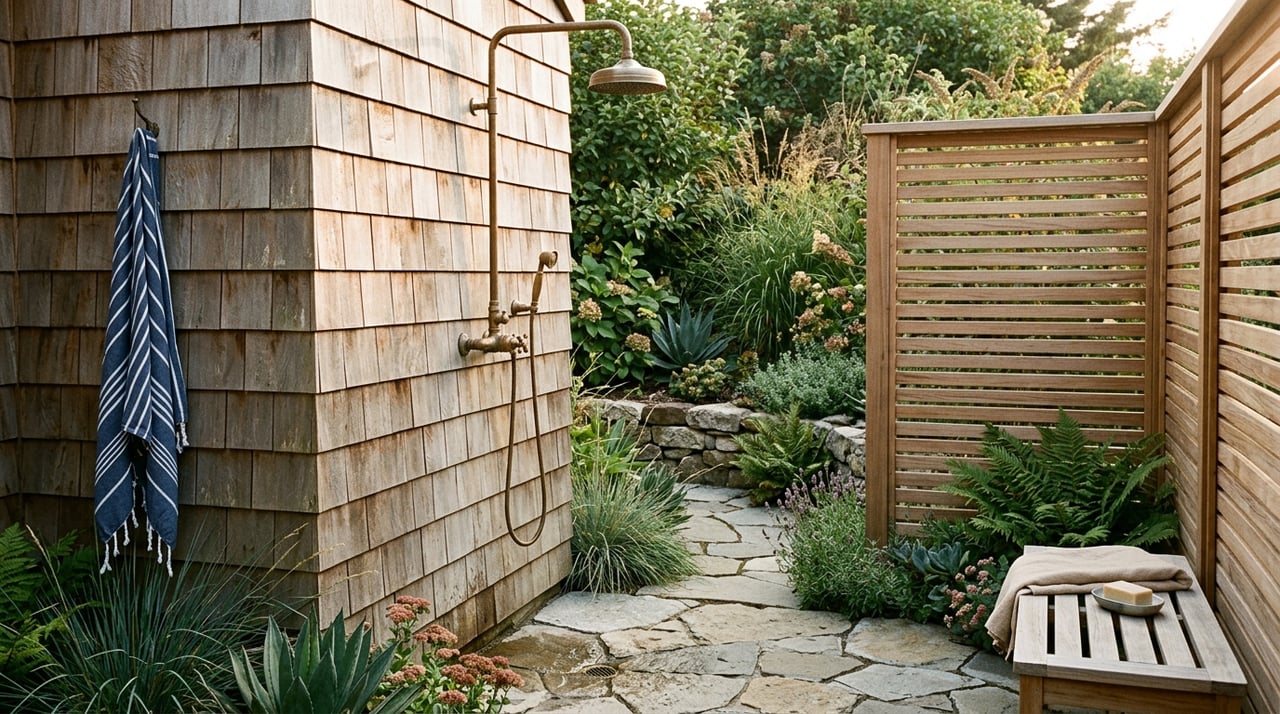
Luxury does not always announce itself. In Amagansett, it often shows up as a quiet lane, a cedar-shingled house, a walkable village center, or a stretch of protected shoreline that feels remarkably untouched. If you are drawn to the Hamptons but want something more discreet, more grounded, and more enduring, Amagansett offers a different kind of prestige. Let’s dive in.
Why Amagansett feels different
Amagansett is a hamlet in the Town of East Hampton on Long Island’s South Fork, and its appeal starts with scale. Town planning documents describe a year-round population of 1,290, with 70.7% of housing in seasonal use. About 45% of land is preserved as open space, and only 11% remains vacant.
Those numbers help explain why Amagansett feels compact and finite rather than sprawling. This is not a place shaped by rapid expansion. It is a place defined by preservation, restraint, and a strong sense of what should stay the same.
East Hampton Town has described Amagansett’s commercial center as one of the most historic and best preserved small villages in America. Planning documents emphasize tree-lined streets, human-scaled buildings, historic structures, farmland vistas, and open space. The result is a setting that feels polished without feeling overbuilt.
Low-key luxury starts with setting
In Amagansett, luxury is closely tied to the landscape. The area’s identity is shaped by dunes, beaches, open sky, and preserved land, not by dense commercial development or a high-energy resort atmosphere.
New York State’s scenic-area planning for East Hampton highlights the seaward portions of Amagansett’s historic center, along with dunes, ponds, estates, and farmland. It also points to the area’s preserved architecture, tree-lined streets, and historic street network. That combination gives Amagansett a sense of continuity that many coastal markets cannot easily replicate.
If you value privacy, calm, and a strong sense of place, this matters. The luxury here feels curated by nature and protected by planning, not manufactured by excess.
Beaches with a quieter profile
Amagansett’s beach access is one of its strongest lifestyle draws. East Hampton Town lists several local beaches, including Indian Wells Beach, Atlantic Avenue Beach, Big Albert’s Landing Beach, Fresh Pond, Lazy Point, Little Albert’s Landing Beach, and Napeague Lane Beach.
Indian Wells and Atlantic Avenue are ocean beaches with lifeguards when on duty. Atlantic Avenue includes a paid lot, while Indian Wells is town-permit only. Those practical details may seem small, but they shape how you use the shoreline and how each beach experience feels day to day.
What makes Amagansett especially distinct is the surrounding habitat. Town planning documents identify the Atlantic Double Dunes and Napeague Beach as among the largest undeveloped barrier beach and backdune ecosystems on Long Island. They also describe Napeague Harbor as one of the least developed large coastal bays on eastern Long Island.
That protected setting gives the coastline a calmer, less commercial feel. You are not just near the ocean. You are part of a coastal environment that remains unusually intact.
Conservation shapes the lifestyle
Amagansett’s beach culture comes with an added layer of stewardship. The Amagansett National Wildlife Refuge includes a beach section that is open to the public, while the back-dune area is closed to entry.
Public beach access at the refuge closes from March 30 through August 31 to protect nesting shorebirds, including piping plovers and least terns. For buyers, that is more than a seasonal rule. It is a sign of the values that shape this place.
In Amagansett, the shoreline is treated as both an amenity and a protected natural system. That balance is a large part of what gives the area its low-key, lasting appeal.
A village core that stays usable
Amagansett is not built around nightlife or large-scale tourism. Its social and commercial life is centered on a compact village core, and that makes day-to-day living feel simple and refined.
Town documents describe the historic center as highly walkable, with small shops and eateries. Amagansett Square describes itself as a neighborhood park with boutique storefronts, eateries, and wellness shops. Together, those elements support a lifestyle that feels convenient and elevated without becoming busy or overstated.
The planning framework matters here too. East Hampton Town has repeatedly emphasized preserving walkability, small-town charm, and the hamlet’s intimate scale. That is one reason Amagansett reads more as a refined village by the beach than as a resort district.
Connected, but still tucked away
For many buyers, especially those coming from New York City, access is part of the equation. The MTA lists Amagansett as a stop on the Montauk Branch, placing it among the East End hamlets accessible by rail.
There is even a detail that captures the scale of the place perfectly: if you are heading to Amagansett by train, only the first two cars open at the station. It is a small point, but it reflects the hamlet’s compact character in a memorable way.
Amagansett is also well positioned within the Town of East Hampton. Planning documents describe it as centrally located, which helps explain why it can feel both private and connected. You can enjoy its quieter temperament while remaining within reach of nearby East End destinations.
Homes with texture and restraint
Amagansett’s housing character is central to its appeal. The story here is not only about large homes or beach access. It is also about architectural continuity, preserved scale, and a visual language that feels rooted in place.
East Hampton Town’s historic district guidelines note that the Amagansett Historic District has an open, rural setting and that wood-shingled exteriors predominate on Main Street. The district’s essential character is tied to 27 historic residences, with examples from the Greek Revival, Italianate, and Victorian eras.
Contemporary design is permitted, but it is expected to respond to the district’s forms, materials, and scale. That helps newer homes feel integrated rather than disruptive. In practical terms, the market includes historic cottages, traditional shingle-style and clapboard homes, preserved village buildings, and newer residences designed to respect the surrounding context.
The hamlet’s broader planning history adds more depth. East Hampton Town points to the Amagansett Historic District, the Bluff Road Historic District, and the area’s maritime and agricultural roots. This is one reason Amagansett feels layered rather than purely seasonal.
Preservation gives luxury staying power
One local landmark helps illustrate that point. The National Park Service lists the Amagansett United States Life-Saving and Coast Guard Station at 160 Atlantic Avenue, with significance in architecture, maritime history, and military history.
That kind of landmark reinforces the area’s identity. In Amagansett, luxury is not detached from history. It is often strengthened by it.
For buyers who want a home that feels part of a preserved coastal landscape, this matters. The value here is not just in square footage or finishes. It is in belonging to a setting with continuity, structure, and character.
What the market says
Amagansett sits firmly in the luxury segment, but market snapshots can vary because inventory is limited and the mix of properties changes quickly. In late March 2026, Zillow showed a median list price of $3,615,000.
Redfin reported a median sale price of $7.3 million in March 2026. A year-end 2025 market report placed the median home sales price at $4,247,500 across 68 sales.
That spread is not unusual for a thin, luxury-heavy market. In a place like Amagansett, a small number of transactions can shift headline figures meaningfully. For buyers and sellers, that is a reminder that hyper-local analysis matters more than broad averages.
Who Amagansett tends to suit
Amagansett tends to resonate with buyers who define luxury as space, calm, and curation. It suits people who want ocean access without overdevelopment, a walkable village without constant activity, and a home that feels connected to a protected landscape.
It may be especially appealing if you are looking for a second home with privacy and ease, or if you prefer a quieter East End experience with strong architectural character. The hamlet’s planning framework, preserved open space, and understated social scene all support that profile.
If your style leans toward discreet rather than flashy, Amagansett has a strong case. It offers a version of Hamptons living that feels self-possessed, elegant, and deeply place-specific.
Why low-key luxury lasts
Trends come and go, but places with strong physical identity tend to hold attention for longer. Amagansett’s appeal rests on fundamentals that are hard to reproduce: protected open space, a compact and walkable village center, preserved architecture, and a coastal setting that still feels natural.
That is what makes the phrase low-key luxury fit so well here. The experience is elevated, but the tone is restrained. The setting speaks for itself.
If you are considering buying, selling, or leasing in the Hamptons and want guidance grounded in local market nuance, discreet strategy, and a clear understanding of what makes each hamlet distinct, Alison Graham offers a polished, high-touch approach shaped by both luxury sales experience and analytical rigor.
FAQs
What makes Amagansett feel low-key compared with other Hamptons areas?
- Amagansett’s small scale, protected open space, walkable village center, preserved historic character, and less commercial beachfront setting all contribute to a quieter, more understated feel.
What beaches are in Amagansett?
- East Hampton Town lists Indian Wells Beach, Atlantic Avenue Beach, Big Albert’s Landing Beach, Fresh Pond, Lazy Point, Little Albert’s Landing Beach, and Napeague Lane Beach in Amagansett.
What is the housing character in Amagansett?
- Amagansett includes historic cottages, wood-shingled and clapboard homes, preserved village properties, and newer residences that are expected to respect local forms, materials, and scale.
Is Amagansett walkable?
- The historic village center is described by East Hampton Town as highly walkable, with small shops and eateries that support a village-scale lifestyle.
How expensive is the Amagansett real estate market?
- Recent market snapshots place Amagansett in the upper-multi-million-dollar range, with reported figures including a $3.615 million median list price, a $7.3 million median sale price, and a $4.2475 million median sales price in a 2025 year-end report.
Can you get to Amagansett by train?
- Yes. The MTA lists Amagansett as a stop on the Montauk Branch, making it rail-accessible from New York City and other Long Island points.