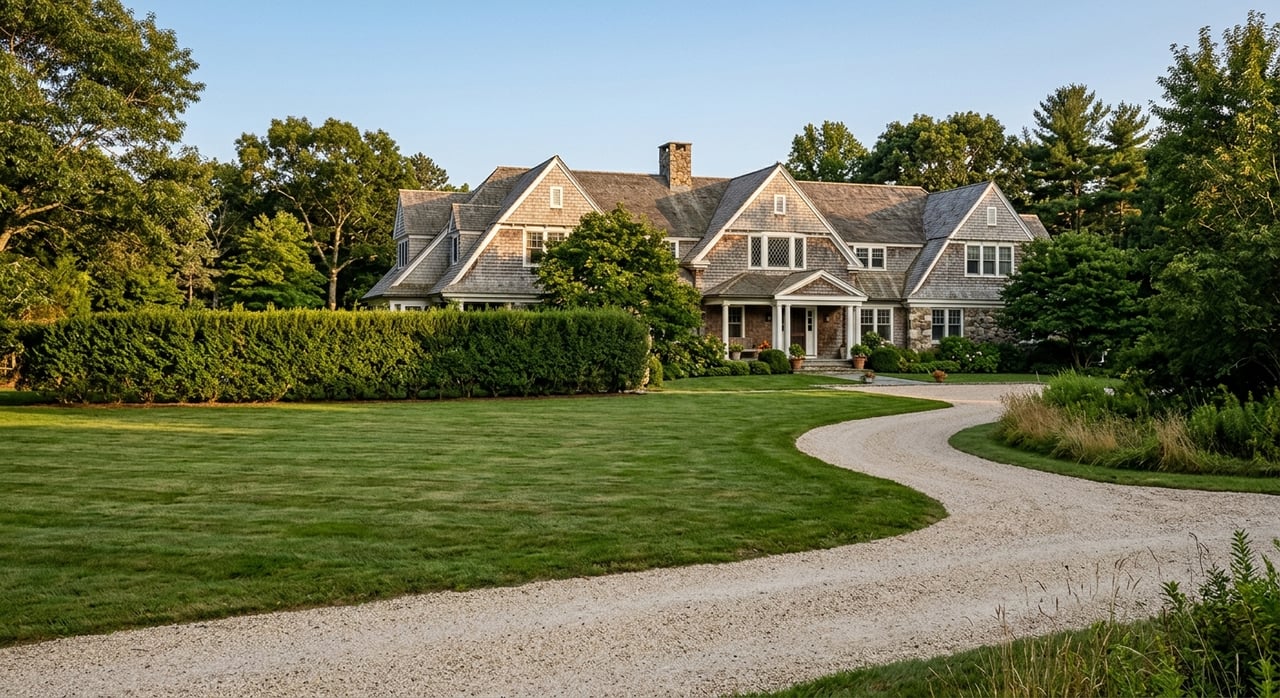
What are you really paying for in Sagaponack: the house, the acreage, or the feeling that no one can easily build into your view? In this part of the Hamptons, that question matters more than it does in many other luxury markets. If you are buying, selling, or evaluating an estate here, understanding how land, privacy, and local regulation work together can help you price more accurately and make better decisions. Let’s dive in.
Why Sagaponack Is a Land Market
Sagaponack is not just a place where large homes happen to sit on large parcels. Village materials describe it as predominantly single-family residential, with agriculture as the most prevalent non-residential land use. The village zoning code also states a clear goal of preserving established character, prime agricultural land, natural areas, and scenic beauty.
That matters because value here is shaped by setting as much as structure. In a market built around rural character, open land, and carefully controlled development, the quality of a parcel often carries unusual weight. A finished interior can be changed over time, but protected views, lot configuration, and surrounding land patterns are much harder to replicate.
The market is also very thin. In the Douglas Elliman and Miller Samuel Q3 2025 report, Sagaponack had only 5 sales, 11.4 months of supply, and a median sale price of $5.8 million. With so few transactions, even small differences in legal use, view durability, and usable land can move value in a meaningful way.
How Zoning Shapes Value
In Sagaponack, lot size is not just a headline number. The village dimensional table requires minimum lot areas of 40,000 square feet in R-40, 80,000 square feet in R-80, and 120,000 square feet in R-120. It also requires minimum lot widths of 150, 175, and 200 feet, along with front setbacks of 60 to 80 feet and rear setbacks of 70 to 100 feet.
Those rules help explain why two properties with similar acreage may not feel equally private. A larger parcel can create more real distance between the main house, neighboring homes, outdoor living areas, and service functions. But the privacy benefit depends on how the site sits within the buildable envelope, not just how many acres appear on paper.
Lot coverage limits matter too. Because total lot coverage is capped by lot size, a property with more land may offer better separation for a pool, guesthouse, drive approach, landscaping, and utility areas. In practice, the most valuable land is often the land you can use well, screen well, and enjoy without visual interference.
What Creates a Privacy Premium
In Sagaponack, privacy is usually functional. It is not just about owning more square footage of dirt. It is about whether the parcel allows longer approaches, better spacing from neighbors, screened outdoor areas, and more controlled sightlines.
That distinction is important for both buyers and sellers. A large lot with awkward orientation may deliver less privacy than a slightly smaller parcel with better placement of the house, landscape buffers, and outdoor living zones. The premium comes from how the land performs.
Sightlines are a major part of that performance. Suffolk County states that preserved open space adjacent to residential areas improves property values and attracts homebuyers. County materials also note that preserving farm fields can preserve the scenic quality of a rural road.
For you, that means an open view is not equal to a protected view. Looking across agricultural land or preserved open space can be more valuable when that openness is durable over time. In a village like Sagaponack, the stability of what surrounds a property can matter almost as much as the property itself.
Why Agricultural Land Matters
Agriculture is not a backdrop here. It is part of the local land-use framework and part of the market story. The village created its Agricultural Overlay District to preserve highly productive and economically viable farmland, and the code expresses a public policy of preserving those lands for agricultural purposes.
Within that overlay, subdivisions must preserve open space at 35 percent, 50 percent, or 65 percent depending on the underlying zoning district. The code also generally restricts the removal of Class I and Class II agricultural soils except as part of approved construction. These are not abstract planning ideas. They directly affect how land can be divided, altered, and experienced.
The county’s preservation framework adds another layer. County materials explain that when development rights are sold, the land remains in agricultural use only. The county also notes that Agricultural District enrollment can help farms receive property tax assessments based on agricultural production value rather than development value.
For a buyer or estate owner, this can support the long-term rural character that makes Sagaponack distinctive. It can also reduce the chance that nearby open land will simply convert into a more typical development pattern. At the same time, you should distinguish between land that is permanently preserved and land that is only being farmed today.
Protected Views vs Temporary Openness
This is one of the most important pricing questions in Sagaponack. A property may enjoy a beautiful open view today, but the source of that view matters. If the adjacent land is protected by a recorded easement or county preservation structure, the openness may be more durable.
If the land next door is simply undeveloped at the moment, the picture may be very different. Temporary openness can still carry value, but it should not be priced like permanent or highly protected scenic separation. In a market with few sales and high price points, that distinction can have an outsized effect.
This is also where experienced due diligence becomes critical. Buyers often focus first on the main residence, but in Sagaponack, the legal status of neighboring land can be just as important to long-term enjoyment and future resale. Sellers benefit from understanding this too, because documented durability can strengthen how a property is positioned in the market.
Coastal and Wetland Rules Affect Premiums
Not every premium in Sagaponack comes from size or farmland adjacency. Coastal and wetland regulations can shape both value and limitations, especially on ocean-facing or wetland-adjacent parcels. Village code cross-references rules covering coastal erosion, flood damage, wetlands, dune areas, setbacks from dune crests, native vegetation, clearing, and site disturbance.
The wetlands chapter also includes buffer and restoration requirements. For some properties, this can enhance the protected natural setting that buyers want. For others, it can limit how easily outdoor spaces, improvements, or expansions can be altered.
That does not make these parcels less desirable by default. It simply means the premium should be analyzed with precision. In Sagaponack, natural features can add enormous value, but only when you also understand the regulatory framework attached to them.
Due Diligence Questions to Ask
Because Sagaponack is so parcel-specific, a careful review of land use and review pathways matters more than in many luxury markets. Before you anchor to a number, it helps to confirm how the property actually functions under local rules.
Here are some of the most useful questions to ask:
- Which zoning district applies: R-40, R-80, R-120, or another designation?
- Are there overlays affecting the parcel, such as agricultural, tidal floodplain, wetlands, coastal erosion, or OSC?
- Is neighboring open land permanently protected, or is it simply undeveloped today?
- How much of the parcel is practically usable within setback, lot coverage, and environmental constraints?
- If you plan to improve the property, which local board reviews the work?
- If seasonal rental income matters, how do current village rental rules affect flexibility?
The village states that its Architectural and Historic Review Board reviews building permits for new structures, demolitions, and renovations to preserve architectural character and historic integrity. The Planning Board reviews site plan, subdivision, and special exception applications. In other words, the path to creating or preserving privacy is often regulatory as well as physical.
For rental-minded owners, current village rules also matter. The village requires a seasonal rental permit for rentals between May 15 and September 15, with a minimum rental period of 30 days except for two two-week rentals per calendar year. That can still support income potential, but it offers less short-term flexibility than some buyers might assume.
What This Means for Buyers and Sellers
If you are buying in Sagaponack, it helps to think like both a homeowner and an asset manager. Ask not only whether a property feels private today, but why it feels private and whether that condition is likely to hold. The answer may come from lot width, setbacks, preserved agricultural land, board review standards, or coastal protections.
If you are selling, your strongest story may be about more than square footage or finishes. The right presentation often highlights usable land, protected sightlines, open-space context, and the regulatory features that make the setting difficult to replicate. In a thin market, those details can help buyers understand why one parcel deserves a premium over another.
The broader lesson is simple. In Sagaponack, value is often best understood as house plus usable land plus durable views plus a protected rural setting. That is why pricing here can be highly nuanced, and why a disciplined, property-specific approach matters so much.
If you are evaluating a Sagaponack property and want a discreet, analytical perspective on land value, privacy, and positioning, connect with Alison Graham.
FAQs
What makes land value different in Sagaponack real estate?
- Sagaponack is shaped by single-family zoning, agricultural land preservation, large-lot requirements, and a very low sales count, so parcel-specific factors like usable land, sightlines, and legal constraints can have an unusually strong effect on value.
How does zoning affect privacy on a Sagaponack property?
- Zoning rules set minimum lot areas, widths, setbacks, and lot coverage limits, which means privacy depends on how well the house and outdoor spaces fit within the allowed building envelope, not just on raw acreage.
Why are protected views important in Sagaponack home values?
- Views across preserved farmland or protected open space may be more durable over time, and that durability can make those sightlines more valuable than open views across land that could change later.
What is the Agricultural Overlay District in Sagaponack?
- It is a local land-use framework intended to preserve productive farmland and rural open land, with open-space preservation requirements for subdivisions and protections for important agricultural soils.
What should buyers check before purchasing land in Sagaponack?
- Buyers should confirm zoning and overlays, review whether neighboring land is permanently protected, understand environmental constraints, and verify which local approvals may apply to future improvements or redevelopment.
Can you rent out a Sagaponack home seasonally?
- The village currently requires a seasonal rental permit for rentals between May 15 and September 15, with a 30-day minimum rental period except for two two-week rentals per calendar year.